MLA Citations With No Author, Date, or Page
How to cite sources with no author, no date, or no page number in MLA 9. Learn fallback elements, access dates, and in-text citation rules.
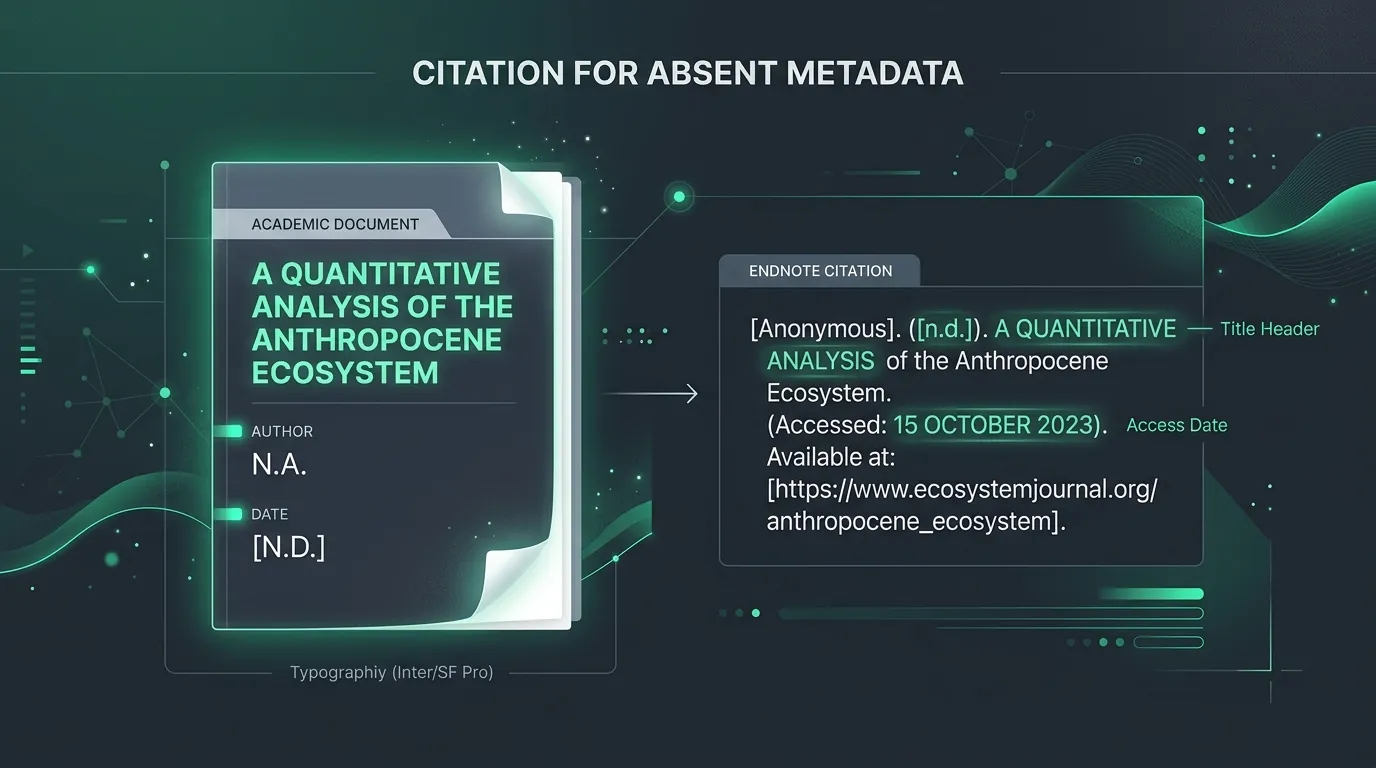
Some sources give you almost nothing. There’s no author, no date, and no page numbers. Citation generators often stall or guess wildly. Relax, because MLA 9 has clear rules for these cases. This guide explains how to cite a source with no author in MLA, what to do about missing dates, and how to handle an unpaginated source. By the end, even bare-bones sources won’t scare you.
How Does MLA Handle a Source With No Named Author?
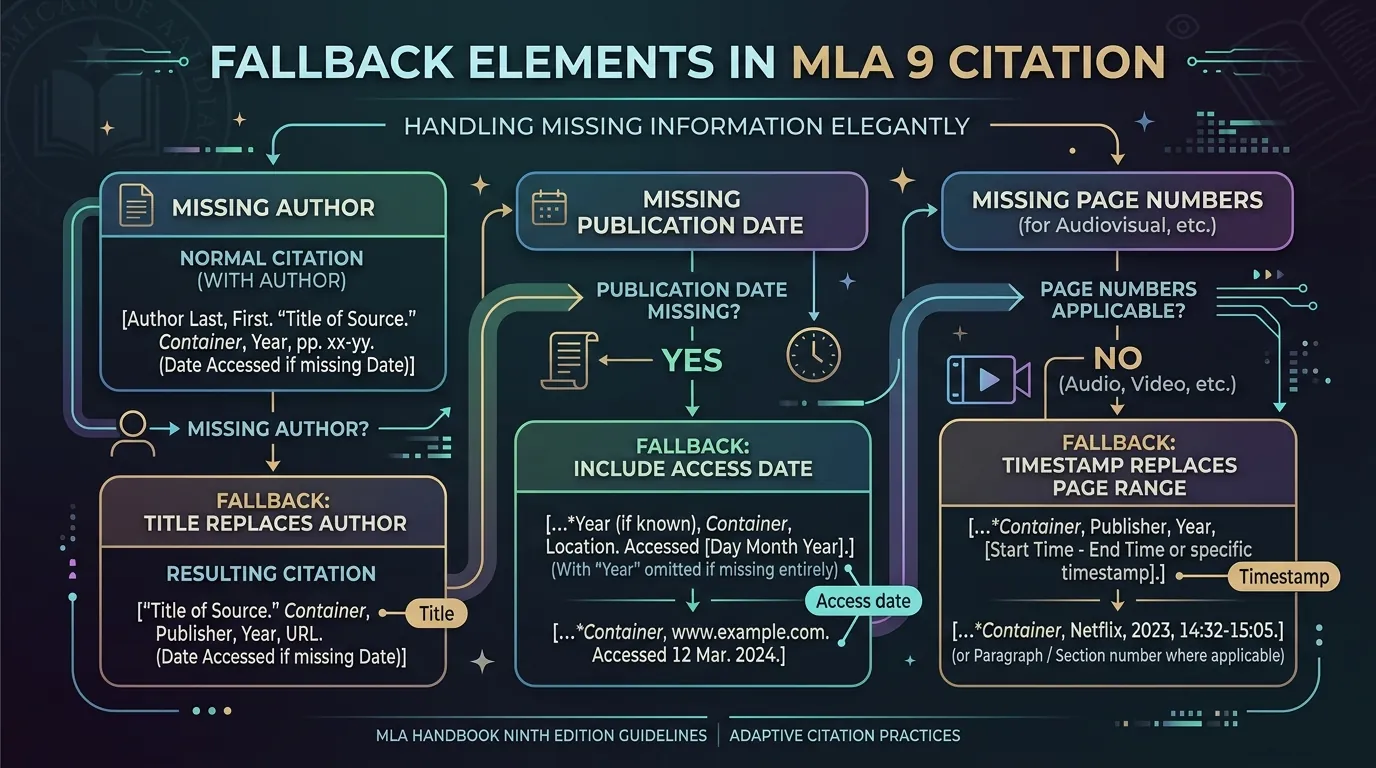
Simply skip the author slot. Start the entry with the title instead. Don’t write “Anonymous” unless the source itself uses that word. This is the standard MLA citation no author rule.
In your text, use a shortened title, like (“Healthy Sleep Habits”). Before you do, look again. Many “authorless” pages actually have a group author, such as a hospital or agency. That organization counts as a real author.
What Should You Do When an Online Source Has No Publication Date?
Search the page one more time. Check the headline area, the footer, and the copyright line. Some pages tuck dates beside comments or share buttons.
If you still find nothing, leave the date out. MLA 9 doesn’t use “n.d.” Instead, add an access date at the end, such as “Accessed 15 Sept. 2026.” This is how to cite an undated source in MLA. It tells readers when you viewed content that may change.
How Can You Cite a Source That Provides No Page Numbers?
Never invent page numbers. Just cite the author or short title alone, like (Nguyen). That’s how to cite a source with no page number MLA style.
Some sources number their own paragraphs or sections. In that case, you may use them, like (Nguyen, par. 6). For videos and podcasts, use a time range instead. These options handle absent page numbers cleanly.
How to Cite Online Sources Without Page Numbers
Most web pages have no page numbers, and that’s normal. Printing a page to PDF doesn’t create real ones either. So skip them entirely. Your reader can still search the page for your quote. This simple rule helps you cite online sources without page numbers correctly.
What Information Can Replace Missing Details in an MLA Citation?
MLA avoids placeholders. Instead, other elements step forward. The title takes the author’s spot. The access date supports a missing date. A section name or timestamp can stand in for pages.
| Missing Detail | What to Do Instead | Example |
|---|---|---|
| Author | Start with the title | ”Healthy Sleep Habits.” |
| Date | Add an access date | Accessed 15 Sept. 2026. |
| Page number | Omit, or use par., sec., or time | (Nguyen, par. 6) |
| Title | Write a short description | Photograph of a desert highway. |
How Should You Combine Several Missing Elements in One Citation?
Apply each rule at once. Start with the title. Add the website name in italics. Then add the web address and your access date. Here’s the pattern:
“Healthy Sleep Habits.” WellNest, [page web address]. Accessed 15 Sept. 2026.
In your paper, you’d write (“Healthy Sleep Habits”). This shows how to cite a source with no author, date, or page number. It’s short, but it’s complete and correct.
What Should an MLA Citation Generator Do With Incomplete Sources?
A good generator leaves empty fields empty. It shouldn’t insert “n.d.” or “Anonymous.” It should also let you add an access date by hand.
Sadly, many tools fall short. Some drop the website name into the author slot. Others stamp today’s date as the publication date. These citation generator limitations mean manual citation correction is part of the job.
What Happens When a Source Has No Author, Date, or Page Number at All?
You can still cite it. However, pause and ask whether you should. A page with no author or date may be weak. Check who runs the site and why it exists.
Case study: Picture a high school senior who finds a health tips page with no author or date. She opens the About page. It’s run by a supplement seller. She swaps it for a hospital page instead. That’s smart MLA source evaluation in action.
How Can You Distinguish Between Missing Information and Information That Does Not Apply?
These two ideas sound alike, but they differ. Missing information exists somewhere, yet you can’t find it. Information that doesn’t apply never existed at all. For instance, a web page has no volume number.
MLA’s flexible model covers both situations. You leave out any element that doesn’t fit your source. So a blank volume slot for a web page isn’t an error. Knowing this prevents citation ambiguity and needless stress.
Identifying Missing Metadata in MLA Citations
Start by naming the source type. Then ask which elements normally belong to it. A journal article needs a volume and issue. A blog post doesn’t. This quick habit helps you handle missing metadata in MLA and spot true source information gaps fast.
What Manual Decisions Are Required When an Automated Citation Cannot Resolve a Source?
Some choices need a human brain. You’ll decide what leads the entry, usually the title. You’ll write a description for untitled works. You’ll also judge whether an access date is needed.
Containers need judgment too. Is your source inside a website, an app, or a database? Tools often guess wrong here. Making these calls yourself helps you fix incomplete MLA citation entries that software can’t finish.
Conclusion
Missing details won’t stop you. Start with the title when there’s no author. Add an access date when there’s no date. Skip page numbers you can’t find, or use paragraphs and timestamps instead. Never invent a detail, and always judge the source’s quality first. With these simple rules, you can cite a source with incomplete details confidently and check an incomplete MLA reference before you submit.